
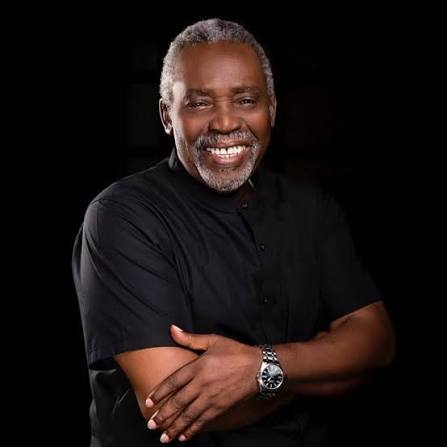
Nigeria’s Theatre and Film Industry Loses One of Its Greatest Icons, the DOYEN of Nollywood.
By Isaac Izoya
Nigeria’s film and theatre industry has been plunged into mourning following the death of one of its most distinguished sons, veteran actor, theatre practitioner and film executive, Oludotun Baiyewu Jacobs (MFR), popularly known as Olu Jacobs, who has died at the age of 84.
The legendary actor died on Wednesday, September 16, 2026, bringing to an end a remarkable career that spanned more than five decades and crossed the worlds of British theatre and television, international cinema and Nigeria’s evolving Nollywood industry. His death was announced by his son, Olusoji Jacobs, on behalf of the family.
In a deeply moving statement, the family said:
“It is with gratitude to God for a life well lived and fought, that we announce the passing of our dear husband, father, grandfather and uncle. The Lion of Lufodo.”
The family identified him as Oludotun Baiyewu Jacobs (MFR), July 11, 1942 – September 16, 2026, while appealing to bloggers and social-media users to respect the family’s privacy during their period of mourning.
A Giant Has Fallen
For generations of Africans, Olu Jacobs was far more than an actor.
He was a commanding presence. A distinctive voice. A master of character. A theatre-trained professional whose performances could transform an ordinary scene into a memorable cinematic moment.
Whether portraying a king, traditional ruler, patriarch, politician, businessman or stern family head, Jacobs possessed a rare authority that made audiences listen whenever he spoke.
His death therefore represents not merely the passing of a celebrated actor, but the closing of an important chapter in the history of African theatre and cinema.
FROM KANO TO THE WORLD STAGE
Born on July 11, 1942, Jacobs spent part of his formative years in Kano, where his interest in acting was reportedly strengthened after watching legendary Nigerian theatre pioneer Hubert Ogunde perform.
That encounter helped set him on a path that would eventually take him to Britain, where he trained at the prestigious Royal Academy of Dramatic Art (RADA) in London.
He subsequently established himself in British theatre and television before making his mark in international cinema.
His international credits included films such as The Dogs of War, Baby: Secret of the Lost Legend and Roman Polanski’s Pirates. He also appeared in several British television productions, including The Goodies, Barlow at Large, The Venturers, Angels, The Tomorrow People and The Professionals.
This was a remarkable achievement for a Nigerian performer at a time when opportunities for African actors on major international stages were considerably more limited.
THE RETURN HOME — AND THE RISE OF NOLLYWOOD
When Jacobs returned to Nigeria, he brought with him years of international experience, discipline and professional theatre training.
He became one of the defining faces of Nigeria’s modern film industry and one of the veteran performers who helped give Nollywood a distinctive identity.
His powerful performances and unmistakable voice earned him admirers across Nigeria and beyond.
For millions of viewers, seeing Olu Jacobs on screen meant seeing authority.
He did not simply play characters — he inhabited them.
His career eventually extended across more than 120 Nigerian film productions, alongside his extensive theatre and television work.
A CAREER DECORATED WITH HONOURS
Jacobs’ contribution to African cinema earned him numerous recognitions.
Among them was the Africa Movie Academy Award for Best Actor in a Leading Role in 2007, followed by an Industry Merit Award at the Africa Magic Viewers’ Choice Awards in 2013 and later lifetime-achievement recognition for his contribution to African cinema.
The Federal Government of Nigeria also honoured him with the national award of Member of the Order of the Federal Republic (MFR) in recognition of his service to the Nigerian entertainment industry.
THE LUFODO LEGACY
Beyond the screen, Olu Jacobs and his wife, celebrated actress Joke Silva, became one of Nigeria’s most respected creative partnerships.
Together, they co-founded the Lufodo Group, with interests spanning production, distribution, consultancy and performing-arts development. Their work through the Lufodo Academy of Performing Arts contributed to the training and development of another generation of Nigerian creative professionals.
The family’s description of Jacobs as “The Lion of Lufodo” therefore carries a profound meaning.
He was not simply part of the Lufodo story.
He was one of its pillars.
A LIFE THAT REFUSED TO BE FORGOTTEN
In his later years, Jacobs largely withdrew from public life. His health had previously generated intense public interest and, tragically, false reports of his death circulated on several occasions.
Those rumours repeatedly proved untrue.
Indeed, his 84th birthday was celebrated only on July 11, 2026, when Joke Silva paid tribute to her husband and affectionately called him “Sir J — The Lion of Lufodo.” Admirers, colleagues and fans joined the family in celebrating his remarkable life.
But on September 16, the news Nigerians had repeatedly hoped would once again prove false came directly from the Jacobs family.
This time, it was real.
THE FINAL CURTAIN
Olu Jacobs leaves behind a body of work that stretches across generations.
He belonged to the era before Nollywood became a global phenomenon. He witnessed its transformation, contributed to its growth and became one of the faces through which the world came to recognise Nigerian cinema.
For younger actors, he represented a bridge between Nigeria’s traditional theatre heritage and the modern screen industry.
For audiences, he represented excellence, dignity and commanding artistry.
For colleagues, he was a veteran whose career demonstrated that an African actor could move from the stages of Nigeria to the theatres and television screens of Britain and international cinema without losing his identity.
And for millions who watched him over the decades, he was simply Olu Jacobs — the voice, the presence, the king, the patriarch, the storyteller.
Today, Nigeria mourns.
Africa mourns.
The global African film community mourns.
After more than five decades beneath the lights, the curtain has finally fallen on the Lion of Lufodo.
But the curtain cannot erase the performance.
His voice remains in the films.
His characters remain in the memories of audiences.
His influence remains in the actors he inspired.
And his legacy remains woven into the history of Nigerian theatre and cinema.
Olu Jacobs may have left the stage, but the legend does not leave with him.
Rest in peace, Sir J.
Oludotun Baiyewu Jacobs (MFR)
July 11, 1942 – September 16, 2026
The Lion of Lufodo.
The curtain falls. The legacy lives on.
Have any thoughts?
Share your reaction or leave a quick response — we’d love to hear what you think!
-
 0
0 - 0
- 1
- 1
- 1
- 0